FRP Cabin
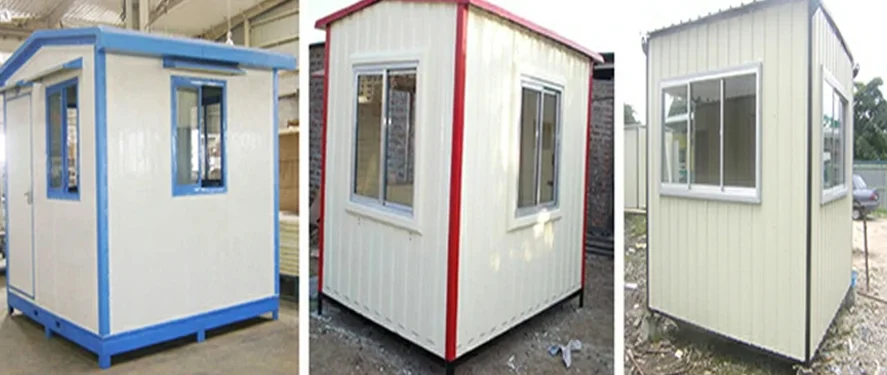
An FRP Cabin is a lightweight prefabricated structure designed for outdoor deployment where durability, portability, weather resistance, and low maintenance are critical. These cabins are widely used for security operations, industrial monitoring, toll management, temporary offices, utility supervision, and workforce shelter requirements across infrastructure and project-based environments.
Project locations often require operational spaces that can be installed quickly without extensive civil work. In many cases, steel-heavy structures become difficult to relocate or maintain in exposed outdoor conditions. That is where FRP-based portable cabins become practical.
UNO Structures manufactures customized FRP cabin solutions from its Greater Noida manufacturing setup and supports supply requirements across India depending on project scope and deployment conditions. The company works with construction contractors, industrial operators, EPC companies, infrastructure developers, logistics operators, hospitals, and utility projects requiring modular outdoor cabin systems built around real operational usage.
Whether the requirement involves a compact security cabin near a plant entry gate, a toll booth for highway operations, or a portable site office for remote project locations, cabin layouts can be customized according to workforce movement, environmental exposure, utility requirements, and installation constraints.
What is FRP Cabin
An FRP cabin is a prefabricated modular structure manufactured using Fiber Reinforced Plastic panels and structural framing systems. These cabins are designed for applications requiring lightweight mobility, corrosion resistance, insulation support, and reduced maintenance in outdoor environments.
Compared to conventional masonry rooms or heavier fabricated structures, FRP cabins are commonly selected where relocation flexibility, faster deployment, and easier transportation become operational priorities. In Indian project environments, they are frequently used for gate security, project monitoring, parking management, temporary workforce supervision, and portable utility operations.
The structure configuration may include:
- Security cabin layout
- Portable office setup
- Guard room arrangement
- Toll booth design
- Equipment monitoring enclosure
- Industrial checkpoint shelter
- Outdoor control room cabin
Depending on usage conditions, cabins can include electrical fittings, insulation support, ventilation systems, sliding windows, lighting provisions, workstations, storage sections, or operator seating arrangements.
Portable Security Cabin Solutions for Industrial Sites
Security deployment requirements change frequently across active project environments. Fixed civil rooms often become impractical when access routes, gate positioning, or operational movement changes during execution phases.
FRP-based portable security cabins are commonly used because they can be shifted, installed, and repositioned without major dismantling activity.
Common deployment scenarios
Factory and warehouse gate security: Used for workforce entry management, visitor logging, vehicle monitoring, and material dispatch supervision.
Construction project checkpoints: Suitable for temporary project access control where site boundaries continue evolving during execution.
Infrastructure and utility operations: Installed at power distribution zones, pipeline access points, water infrastructure facilities, and operational control areas.
Parking and toll supervision: Used where weather exposure and continuous outdoor operations require enclosed operator space.
For organizations handling multiple temporary deployments, related modular infrastructure planning may also include portable and scalable solutions like container rental infrastructure setups for project-site operational support.
Prefab FRP Cabins for Quick Deployment Requirements
In urgent infrastructure or project mobilization situations, deployment speed becomes a critical operational factor. Delays in creating site supervision spaces can directly affect workforce coordination, access management, and contractor workflow.
Prefab FRP cabins help reduce installation dependency on large civil preparation activities.
Why quick-deployment cabins are preferred
- Minimal foundation dependency in many temporary setups
- Faster transportation handling due to lighter structural weight
- Easier movement within active project sites
- Reduced maintenance requirements in outdoor conditions
- Practical for temporary or semi-permanent usage cycles
This becomes especially useful in:
- Highway projects
- EPC construction zones
- Airport support operations
- Industrial expansion projects
- Temporary utility control stations
- Logistics and warehousing sites
Modular Outdoor Cabin Configurations
Different operational environments require different cabin layouts. A security guard at a warehouse gate requires visibility and ventilation, while a monitoring cabin inside an industrial zone may require utility integration and equipment space.
Because of this, modular customization becomes an important selection factor.
Typical customization options
Structural dimensions: Cabins can be designed according to available site space, workforce usage, or operator requirements.
Window and visibility configuration: Window positioning may vary based on surveillance direction, traffic monitoring, or access control requirements.
Electrical provisions: Provisioning may include lights, switchboards, fan points, UPS compatibility, and workstation utility integration.
Internal layout adjustments: Operator desks, storage shelves, counters, seating, and documentation space can be added depending on application.
Surface and weather protection: Depending on environmental exposure, additional weather-resistant finishing considerations may be included.
Applications in Real Use
FRP cabins are widely used across operational environments where lightweight infrastructure support is required without long-duration civil execution dependency.
Real-world usage scenarios
- Guard cabins at industrial facilities
- Toll management booths
- Portable ticketing counters
- Parking supervision cabins
- Outdoor monitoring stations
- Temporary site administration spaces
- Workforce checkpoint cabins
- Utility control shelters
- Construction access cabins
- Institutional security rooms
A major advantage is deployment flexibility. In many temporary project environments, cabins may require relocation as site execution progresses.
Industries Using This Product
FRP cabin demand comes from multiple sectors where operational continuity and outdoor deployment practicality are important.
Common industries include
- Construction and EPC companies
- Warehousing and logistics operators
- Manufacturing plants
- Infrastructure contractors
- Hospitals and institutional campuses
- Airport support infrastructure
- Industrial parks
- Real estate development projects
- Utility and energy projects
- Highway and transport operations
Organizations managing distributed project locations often prefer modular cabin systems because they simplify temporary infrastructure planning across multiple sites.
Design and Customization Options
No two project sites operate the same way. Site movement, environmental conditions, operator count, and utility dependency all affect cabin configuration decisions.
Common customization areas
Cabin size planning: Cabin dimensions may vary from compact single-operator structures to larger multi-user monitoring spaces.
Entry and movement layout: Door positioning can be planned according to pedestrian flow, vehicle movement, or restricted access management.
Interior workspace arrangement: Some buyers prioritize visibility and monitoring, while others require documentation desks, communication equipment, or utility storage.
Ventilation and insulation: Environmental conditions influence airflow planning and heat exposure management requirements.
Branding and appearance: For institutional or commercial deployments, external finishing and branding integration may also be considered.
Technical Considerations
Selecting the right cabin involves more than choosing dimensions. Outdoor exposure, operational duration, transportation movement, and workforce usage patterns all affect long-term practicality.
Key evaluation points
Environmental exposure: Heat, rainfall, humidity, and dust conditions influence structural and finishing requirements.
Relocation frequency: Frequent shifting may require design considerations that improve mobility and transportation handling.
Site access limitations: Narrow access roads or constrained project areas can affect cabin sizing and delivery planning.
Electrical integration: Operational cabins often require internal wiring pathways and power access planning.
Workforce occupancy: Operator count influences ventilation, internal spacing, and workstation planning.
How to Choose the Right FRP Cabin
Buyers often focus only on cabin dimensions during initial discussions. In practice, operational suitability matters more than external size alone.
Questions that help shortlist the right structure
- Is the cabin temporary or long-duration?
Deployment duration affects structural planning, utility integration, and maintenance expectations.
- Will the cabin be relocated later?
If relocation is likely, transportation-friendly dimensions and lifting considerations become important.
- How exposed is the installation area?
Open outdoor environments require different considerations than partially covered industrial locations.
- What operational activity happens inside?
A security cabin, monitoring room, and portable office each require different internal layouts.
- Is rapid deployment important?
Projects with urgent mobilization requirements often prioritize quicker installation workflows.
Common Mistakes Buyers Make
Choosing based only on lowest cost: Lower-cost structures may create operational issues later through poor weather resistance or reduced usability.
Ignoring site movement conditions: Cabin placement sometimes changes during active construction phases. Oversized structures can become difficult to reposition.
Underestimating ventilation needs: Small enclosed cabins used continuously by operators require proper airflow planning.
Overlooking electrical planning: Late-stage electrical modifications can complicate installation and internal usability.
Selecting incorrect cabin size: Very compact layouts may reduce operational comfort during long working shifts.
When This Product May Not Be Suitable
FRP cabins are practical for many operational applications, but not every infrastructure requirement should use this format.
Situations where alternatives may work better
- Permanent high-occupancy office requirements
- Heavy industrial load-bearing usage
- Large workforce accommodation setups
- Multi-floor operational structures
- Applications requiring extensive heavy equipment integration
In such cases, larger modular container systems or permanent construction may be more suitable depending on project objectives.
Installation and Delivery Process
The installation workflow depends on cabin size, customization level, transportation access, and site readiness conditions.
Typical execution stages
Requirement discussion: Usage conditions, dimensions, utility requirements, and operational objectives are reviewed.
Design finalization: Layout planning, openings, fittings, and customization details are finalized.
Manufacturing process: Cabin fabrication and internal preparation activities are completed at the Greater Noida manufacturing facility.
Transportation coordination: Delivery planning depends on site access conditions and unloading feasibility.
Placement and utility setup: Final positioning, leveling, and utility integration activities are coordinated at the deployment location.
For remote or active construction environments, site readiness significantly affects installation efficiency.
Pricing and Cost Factors
FRP cabin pricing varies according to operational requirements rather than a single standard configuration.
Major cost influencing factors
- Cabin dimensions
- Interior customization
- Electrical integration
- Window and door configuration
- Insulation requirements
- Transportation distance
- Site accessibility
- Deployment complexity
- Quantity requirements
- Finishing specifications
Buyers planning multiple site deployments often evaluate long-term usability and relocation flexibility alongside initial procurement cost.
Why Businesses Choose UNO Structures
Industrial buyers usually evaluate more than just fabrication capability. They also assess execution familiarity, customization support, deployment understanding, and project coordination experience.
UNO Structures reflects the company’s experience across prefabricated infrastructure, containerized systems, PEB projects, portable structures, and execution-oriented industrial requirements.
Key operational strengths include:
- Manufacturing support from Greater Noida
- Pan India project supply capability
- Experience across industrial and infrastructure environments
- Practical customization support
- Multi-sector deployment understanding
- Project-oriented execution coordination
With over 16 years of industry experience, 900+ completed projects, and 400+ clients served, the company has supported requirements for organizations including DLF, MAX Healthcare, Delhivery, Larsen & Toubro, Tata Power Solar, Toshiba, Reliance Industries Limited, Samsung Electronics, and Noida International Airport.
Common Buyer Questions Before Purchase
1. Can FRP cabins be relocated after installation?
Yes. Many buyers choose FRP structures specifically because they are comparatively easier to reposition than permanent civil rooms, especially in evolving project environments.
2. Are these cabins suitable for harsh outdoor conditions?
Suitability depends on exposure conditions, deployment duration, and structural configuration. Weather resistance requirements should be discussed during planning.
3. Can internal electrical fittings be included?
Cabins can be planned with lighting points, switchboards, ventilation systems, and workspace utility provisions depending on operational requirements.
4. Is customization possible for restricted site spaces?
Yes. Cabin dimensions and layouts can be adjusted according to site movement limitations, available placement area, and operational workflow.
5. Are these used only as security cabins?
No. They are also used for monitoring rooms, toll booths, portable offices, utility supervision cabins, ticket counters, and temporary operational shelters.
Get FRP Cabin for Your Project
When operational infrastructure is delaying project execution, security deployment, or site coordination, selecting the right portable cabin structure becomes an immediate practical requirement — not just a procurement activity.
UNO Structures supports FRP cabin requirements from its Greater Noida manufacturing operations with supply coordination across India based on project needs and deployment conditions.
Whether the requirement involves a guard cabin, monitoring shelter, toll booth, portable operational room, or customized outdoor infrastructure unit, the discussion can be aligned around actual site usage, mobility expectations, and installation realities.