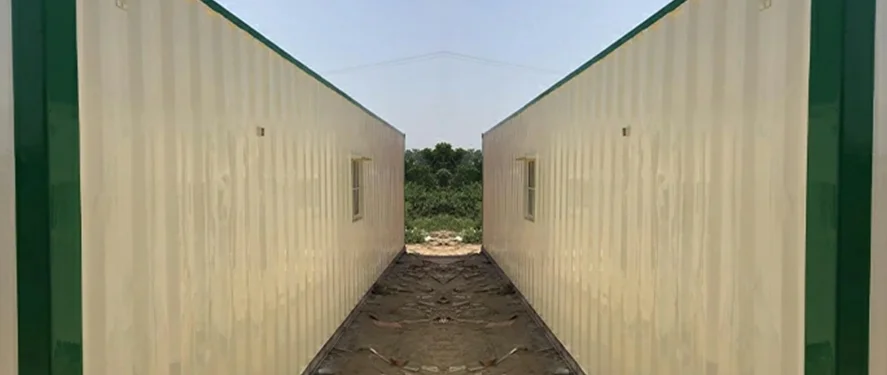
Prefabricated Medical Container Cabin
Healthcare infrastructure delays can directly affect workforce safety, emergency response readiness, patient handling capacity, and temporary medical operations. A Prefabricated Medical Container Cabin helps organizations establish deployable healthcare infrastructure without waiting for long conventional construction cycles. These modular medical units are widely used for project-site clinics, temporary healthcare centers, medical examination rooms, vaccination setups, emergency response facilities, and diagnostic support spaces.
UNO Structures, a Greater Noida-based manufacturer with pan India supply capability, develops customized containerized medical infrastructure solutions based on operational requirements, deployment conditions, utility integration needs, and healthcare workflow considerations. The company supports industrial projects, institutional healthcare expansion, infrastructure projects, EPC sites, remote operations, and temporary medical deployment requirements with practical prefabricated healthcare container solutions.
For organizations handling urgent infrastructure timelines, workforce medical support requirements, or temporary healthcare expansion, these portable medical cabins offer faster deployment flexibility compared to many traditional site-built alternatives.
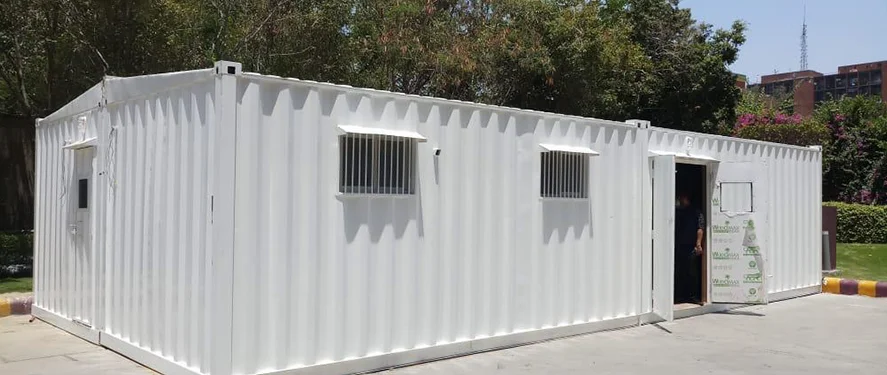
What is Prefabricated Medical Container Cabin
A Prefabricated Medical Container Cabin is a modular healthcare infrastructure unit manufactured using container-based structural systems and customized for medical or clinical operations. These cabins are designed to support healthcare activities such as consultation rooms, first-aid stations, testing areas, diagnostic rooms, vaccination units, remote medical support spaces, and temporary treatment facilities.
Unlike standard portable cabins, medical container units require additional attention toward hygiene-oriented interiors, utility planning, ventilation considerations, workflow movement, washroom integration, electrical routing, medical equipment accommodation, and operational accessibility.
These structures are commonly selected where rapid installation, portability, operational flexibility, and controlled deployment conditions are important.
Portable Medical Container Infrastructure for Project Sites
Construction zones, industrial plants, mining projects, infrastructure corridors, and remote operational locations often require immediate healthcare support facilities without permanent civil construction.
A containerized medical setup becomes operationally useful in situations such as:
Workforce Healthcare Support: Large project sites frequently require on-site examination rooms, emergency observation spaces, or temporary medical consultation areas to reduce dependency on distant healthcare facilities.
Remote-Site Medical Operations: In geographically isolated regions, modular healthcare containers help organizations establish temporary medical infrastructure where conventional building execution becomes difficult.
Emergency Healthcare Expansion: Hospitals and institutions may require rapid expansion infrastructure during temporary demand surges, renovation phases, or operational overflow conditions.
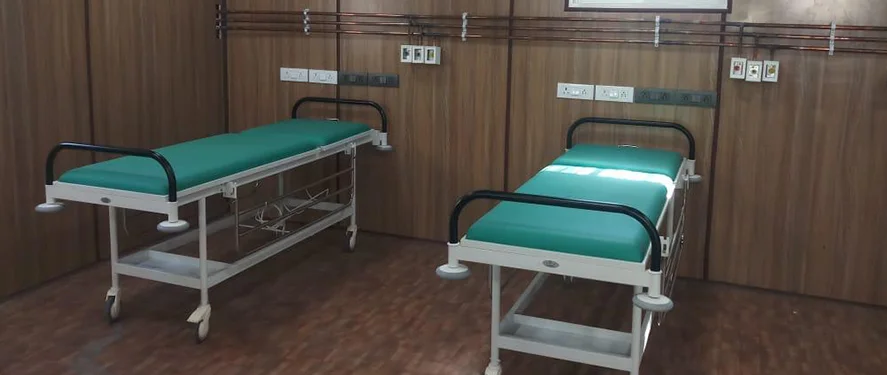
Utility-Controlled Clinical Environment: Medical cabins can be planned with dedicated electrical layouts, water connections, lighting arrangements, partition systems, HVAC planning provisions, and workflow zoning depending on project requirements.
Modular Healthcare Cabin Configurations
Different healthcare operations require different internal planning logic. A medical consultation room differs significantly from a vaccination unit or a diagnostic container setup.
Consultation and Examination Units
Suitable for:
- Doctor consultation rooms
- Occupational health checkups
- Industrial medical assessment
- Workforce examination spaces
Diagnostic and Testing Cabins
These may support:
- Sample collection
- Basic diagnostic workflows
- Screening operations
- Temporary testing infrastructure
Vaccination and Healthcare Outreach Units
Portable healthcare infrastructure is often used for:
- Temporary public healthcare campaigns
- Mobile vaccination support
- Institutional medical camps
- Rural deployment initiatives
Emergency Response Medical Cabins
Used during:
- Infrastructure project emergencies
- Disaster-response support
- Temporary medical isolation planning
- Remote healthcare assistance
Hygienic Interior Planning in Medical Container Systems
Healthcare infrastructure requires more than structural enclosure. Internal usability directly affects operational suitability.
Medical container cabins are generally planned with consideration for:
- Easy-clean interior surfaces
- Workflow-oriented partitioning
- Controlled utility routing
- Lighting support
- Washroom integration feasibility
- Ventilation planning
- Entry and circulation movement
- Equipment positioning flexibility
In many healthcare deployments, interior layout efficiency becomes more important than overall cabin size.
Applications in Real Use
A Prefabricated Medical Container Cabin is used across multiple healthcare and industrial deployment scenarios where rapid operational setup is required.
Typical applications include:
- Industrial project medical rooms
- Temporary healthcare centers
- Construction workforce clinics
- Remote-site healthcare cabins
- Portable diagnostic units
- Highway project medical stations
- Emergency response healthcare cabins
- Vaccination deployment units
- Institutional healthcare expansion spaces
- Temporary OPD infrastructure
- Medical support cabins for infrastructure projects
For fast-moving infrastructure environments, transportability and relocation flexibility often become major operational advantages.
Industries Using This Product
Several industries use modular healthcare infrastructure where temporary or scalable deployment is operationally necessary.
EPC and Infrastructure Projects: Remote project execution environments often require medical support infrastructure for workforce welfare and compliance requirements.
Industrial Manufacturing Facilities: Factories may establish medical examination cabins or occupational healthcare spaces within operational premises.
Institutional Healthcare Expansion: Hospitals and healthcare groups sometimes require temporary modular healthcare space during renovation, expansion, or overflow management.
Oil, Gas, and Energy Operations: Remote operational sites may require deployable healthcare cabins where conventional medical infrastructure is not immediately available.
Government and Public Infrastructure Support: Portable medical units may support temporary healthcare campaigns, vaccination programs, and emergency response requirements.
Design and Customization Options
Medical infrastructure requirements vary significantly depending on operational use.
UNO Structures supports customization planning for:
- Single-unit or multi-unit layouts
- Internal partition planning
- Examination room configuration
- Washroom integration
- Electrical planning
- Lighting provisions
- Ventilation arrangements
- HVAC accommodation
- External branding provisions
- Access doors and windows
- Insulation considerations
- Flooring selection based on usage conditions
Organizations can also plan interconnected container configurations for larger temporary healthcare infrastructure requirements.
You can also explore related modular healthcare infrastructure solutions through the dedicated medical container section at UNO Structures Medical Container Solutions
Technical Considerations
Medical container infrastructure should be evaluated beyond basic cabin dimensions.
Key operational considerations include:
Utility Availability: Medical operations may require stable electrical systems, water connectivity, drainage planning, backup power compatibility, and controlled equipment routing.
Transportation Access; Deployment routes influence cabin dimensions, transport feasibility, unloading methods, and crane accessibility.
Environmental Exposure: Extreme heat, dust-heavy industrial environments, heavy rainfall regions, and remote terrain conditions can affect material and insulation planning.
Internal Workflow Efficiency: Poor circulation planning inside medical cabins can create operational bottlenecks during high-usage periods.
Scalability Requirements: Some projects initially deploy a single unit but later expand into multi-container medical setups.
How to Choose the Right Prefabricated Medical Container Cabin
Selecting the right healthcare container infrastructure depends on operational usage, patient volume expectations, utility requirements, and deployment conditions.
Consider the following before finalization:
- Number of users or patients expected daily
- Temporary or semi-permanent deployment duration
- Site accessibility
- Medical equipment integration needs
- HVAC requirements
- Power backup planning
- Internal workflow requirements
- Future expansion possibility
- Transportation constraints
- Environmental operating conditions
A short-term workforce clinic may require a different configuration than a diagnostic or institutional healthcare setup.
Common Mistakes Buyers Make
Choosing Based Only on Initial Cost: Lower-cost structures sometimes overlook medical usability, insulation suitability, or utility planning requirements.
Ignoring Internal Workflow: Medical movement flow affects operational efficiency. Poor layout planning can reduce practical usability.
Underestimating Utility Load: Healthcare equipment, HVAC systems, lighting, and backup systems require realistic electrical planning.
Not Evaluating Site Conditions: Remote or uneven deployment locations may require additional structural or installation considerations.
Treating Medical Cabins Like Standard Portable Offices: Healthcare environments require different interior planning logic compared to standard office containers.
When This Product May Not Be Suitable
A Prefabricated Medical Container Cabin may not always be the right solution.
It may not be suitable when:
- Permanent multi-floor hospital infrastructure is required
- Very large patient handling capacity is expected
- Extensive fixed medical infrastructure integration is mandatory
- Local regulations require specific permanent construction formats
- High-end surgical infrastructure with highly specialized civil integration is necessary
In such cases, hybrid or permanent healthcare construction models may be more appropriate.
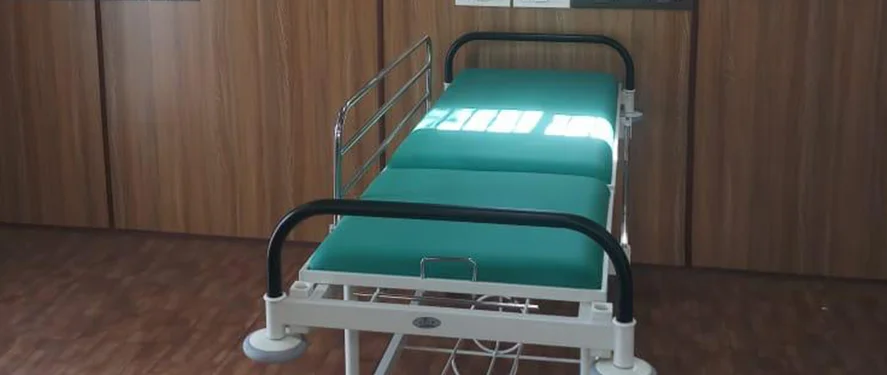
Installation and Delivery Process
The deployment process generally involves:
Requirement Assessment
Understanding healthcare workflow, equipment requirements, utility dependencies, and operational objectives.
Design and Layout Planning
Internal planning is aligned with usage patterns, entry movement, partitions, utilities, and healthcare functionality.
Manufacturing and Customization
The cabin structure is manufactured and customized at the Greater Noida manufacturing facility.
Transportation Coordination
The unit is transported based on route accessibility, unloading feasibility, and deployment logistics.
Site Placement and Utility Integration
Final positioning, utility connectivity, and operational setup are coordinated based on project scope.
For urgent infrastructure timelines, early planning of unloading access and site readiness helps reduce operational delays.
Pricing and Cost Factors
Medical container cabin pricing varies depending on:
- Cabin size
- Structural configuration
- Interior customization level
- Insulation requirements
- Electrical and utility integration
- HVAC planning
- Washroom inclusion
- Medical workflow layout complexity
- Transportation distance
- Site deployment conditions
Projects requiring specialized medical interiors or multi-container integration generally involve different cost structures compared to standard healthcare cabins.
Why Businesses Choose UNO Structures
Organizations selecting healthcare container infrastructure often prioritize execution reliability, customization flexibility, and practical deployment understanding.
UNO Structures supports containerized infrastructure requirements across India with manufacturing operations in Greater Noida and operational support from New Delhi. The company has over 15 years of experience, 900+ completed projects, and 400+ clients served across industrial, commercial, infrastructure, and healthcare-related sectors.
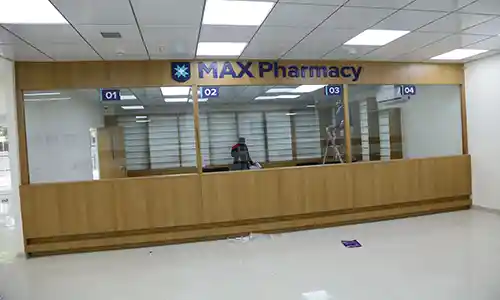
The company has worked on projects associated with organizations such as MAX Healthcare, Max Smart Super Speciality Hospital Burari, Starlit Medical Center Private Limited, and Nirogi Charitable & Medical Research Trust Patparganj.
Healthcare infrastructure buyers also evaluate vendor capability based on execution understanding, customization support, and deployment practicality rather than only structural fabrication.
More about the company’s manufacturing and infrastructure background can be explored through UNO Structures About Us Page and the main corporate platform at UNO Structures
Common Buyer Questions Before Purchase
1. Can these cabins support air-conditioning and medical electrical systems?
Yes, modular healthcare cabins can be planned with electrical routing, lighting layouts, HVAC accommodation provisions, and utility integration depending on operational requirements and equipment usage.
2. Are these suitable for remote deployment projects?
Yes. Containerized medical infrastructure is frequently selected for remote project sites because transportation and installation are generally faster compared to conventional healthcare construction.
3. Can the cabin be relocated later?
Many container-based healthcare structures are selected because relocation remains operationally possible depending on structural configuration and transportation conditions.
4. Is internal customization possible for healthcare workflows?
Yes. Interior planning may include consultation rooms, partitions, examination areas, waiting sections, washroom integration, and utility zoning based on project needs.
5. How quickly can temporary healthcare infrastructure be planned?
Project timelines vary depending on customization scope, cabin size, manufacturing workload, and transportation conditions. Early technical discussions help accelerate deployment planning.
6. Are these only for temporary healthcare projects?
No. Depending on usage requirements, these cabins may be used for temporary, semi-permanent, or long-duration operational healthcare support applications.
7. What should buyers evaluate before selecting a medical container vendor?
Buyers should evaluate structural execution capability, utility planning understanding, customization flexibility, healthcare workflow planning, transportation coordination experience, and deployment practicality.
Get Prefabricated Medical Container Cabin for Your Project
Healthcare infrastructure delays can affect operational continuity, workforce support readiness, and temporary medical response capability. Whether the requirement involves a project-site clinic, emergency deployment healthcare unit, industrial medical room, or modular diagnostic infrastructure, early planning helps reduce execution challenges.
UNO Structures manufactures customized prefabricated healthcare container solutions from Greater Noida with pan India supply capability for industrial, institutional, infrastructure, and project-based requirements.
For project discussions, customization planning, deployment feasibility, or healthcare infrastructure consultation, connect through UNO Structures Contact Us Page