Steel Prefabricated Building
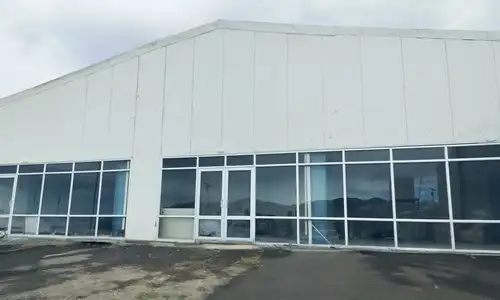
A steel prefabricated building is a factory-manufactured structural infrastructure solution designed for faster industrial deployment compared to conventional construction methods. These structures are widely used for warehouses, workshops, manufacturing units, logistics operations, utility blocks, commercial facilities, and project-based infrastructure where speed, structural consistency, and expansion flexibility are operational priorities.
Industrial projects often face delays because conventional RCC construction depends heavily on weather conditions, labour coordination, and extended site execution timelines. In many cases, delayed building readiness directly affects machinery installation schedules, warehouse commissioning, workforce movement, or production planning.
That is where prefabricated steel infrastructure becomes commercially practical.
UNO Structures manufactures and supplies steel prefabricated building solutions from Greater Noida for industrial and commercial deployment requirements across India. The company supports customized structural planning for warehouses, fabrication units, site facilities, workshops, utility structures, commercial buildings, and scalable industrial infrastructure requirements based on project conditions and operational usage.
With over 15 years of experience, 900+ completed projects, and execution support across multiple sectors, UNO Structures works with EPC contractors, industrial operators, infrastructure companies, warehouse developers, healthcare institutions, and project management teams requiring practical steel building solutions aligned with site realities.
What is Steel Prefabricated Building
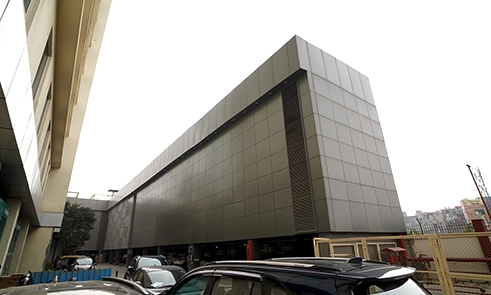
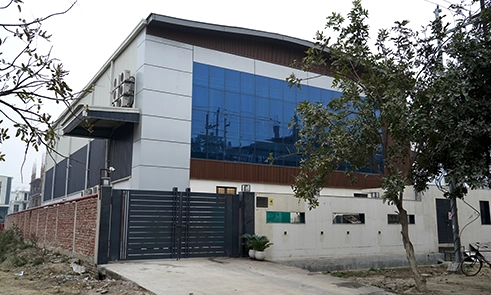
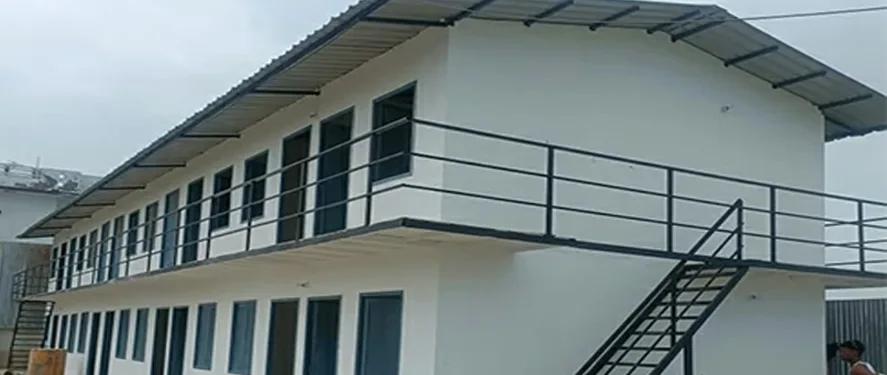
A steel prefabricated building is a pre-engineered structural system where major components such as columns, rafters, beams, roofing systems, and structural frames are manufactured before reaching the project site. The structure is then assembled and installed according to operational layout requirements, reducing dependency on prolonged on-site construction activity.
Unlike traditional construction workflows, prefab steel structures allow better control over structural fabrication quality, phased expansion capability, and large-span coverage requirements. These buildings are commonly selected where businesses require operational continuity, scalable infrastructure planning, and faster project readiness.
The system may include:
- Structural steel framing
- Roofing and cladding systems
- Mezzanine support structures
- Ventilation integration
- Utility routing provisions
- Office integration sections
- Industrial access planning
- Loading and unloading zones
Depending on the application, the building can function as a permanent industrial setup or as a scalable infrastructure asset that supports future operational expansion.
Steel Prefabricated Building for Industrial Expansion Projects
Industrial growth rarely happens in perfectly planned phases. Many businesses require infrastructure expansion while operations are already running. In such situations, extended civil construction can interfere with logistics movement, workforce circulation, utility routing, and machinery deployment schedules.
Steel prefabricated structures are often preferred because they support:
- Faster structural readiness
- Controlled installation sequencing
- Expansion-friendly layouts
- Large operational floor areas
- Reduced site congestion
- Better project scheduling coordination
For warehouse developers, manufacturing facilities, and EPC-led industrial projects, this becomes operationally important rather than just a construction preference.
In sectors where commissioning deadlines affect revenue generation, prefab steel buildings help reduce idle infrastructure waiting periods.
Prefab Steel Structures for Warehousing and Logistics
Warehousing requirements vary significantly depending on inventory movement, vehicle access, loading patterns, and storage heights. A logistics-oriented structure requires different planning compared to a fabrication workshop or commercial utility building.
Steel prefabricated buildings are commonly used for:
High-Clearance Storage Facilities: Suitable for racking systems, material handling movement, pallet storage, and warehouse circulation planning.
Multi-Bay Logistics Structures: Useful where vehicle loading zones, dispatch areas, and operational segregation are required.
Industrial Transit and Utility Infrastructure: Applicable for temporary-to-long-term infrastructure support near ports, highways, manufacturing clusters, or project development corridors.
Scalable Expansion Planning: Additional bays and extensions can often be integrated later depending on future operational growth.
This flexibility is one of the reasons many industrial buyers evaluate prefab structures during long-term infrastructure planning rather than only for immediate space shortages.
Modular Steel Infrastructure for Commercial and Utility Use
Not every steel building requirement is factory-scale. Commercial operators, institutions, and infrastructure companies also require modular structural systems for operational support.
Common deployment examples include:
- Site administration buildings
- Equipment shelters
- Institutional utility blocks
- Commercial storage structures
- Industrial workshops
- Retail infrastructure extensions
- Service centres
- Assembly units
- Maintenance facilities
For businesses handling project-based expansion, prefab systems reduce the uncertainty associated with sequential civil construction dependencies.
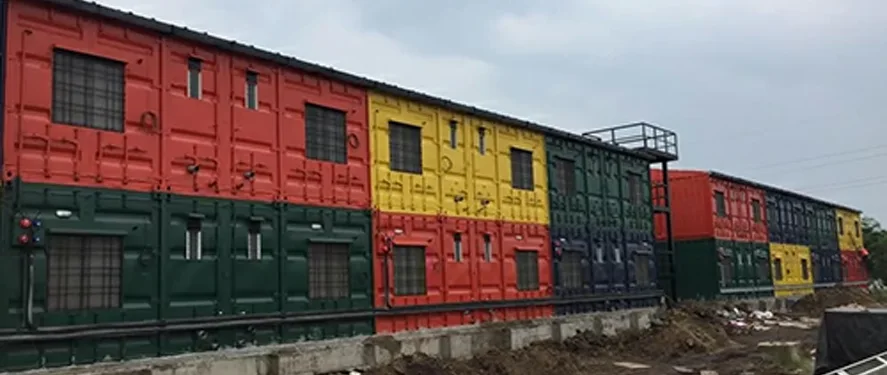
Where required, these structures may also integrate with containerized infrastructure, portable office systems, or utility cabins depending on operational requirements. Businesses evaluating hybrid industrial infrastructure can also explore related solutions through the steel prefabricated building section.
Applications in Real Use
Steel prefabricated buildings are widely used in operational environments where infrastructure readiness directly impacts workflow continuity.
Typical applications include:
- Industrial manufacturing plants
- Warehouse infrastructure
- Cold storage support buildings
- Construction project facilities
- Workshop and fabrication units
- Commercial utility buildings
- Aviation support infrastructure
- EPC project execution sites
- Institutional infrastructure expansion
- Healthcare utility structures
In many industrial environments, the requirement is not only structural coverage but also utility planning compatibility, vehicle movement management, ventilation support, and future scalability.
That is why deployment suitability matters more than generic building dimensions.

Industries Using This Product
Multiple sectors use steel prefab structures because infrastructure requirements differ across operations.
Industries commonly using these systems include:
- Logistics and warehousing
- Manufacturing and engineering
- Healthcare infrastructure
- Construction and EPC
- Energy and utilities
- Infrastructure development
- Aviation support services
- Industrial processing
- Commercial development
- Institutional projects
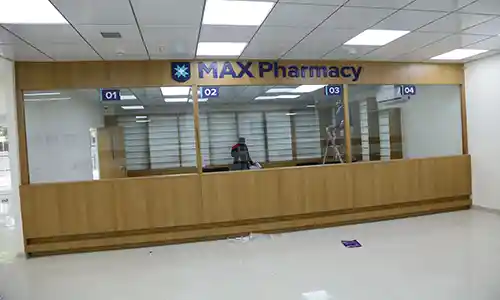
UNO Structures has supplied infrastructure solutions to organizations including DLF, MAX Healthcare, Delhivery, Tata Power Solar, Larsen & Toubro, Toshiba, Reliance Industries Limited, Air India Express, Saint-Gobain, and NCC Limited across different project environments.
Design and Customization Options
Every industrial project has different structural expectations. Some buyers prioritize floor efficiency while others focus on future expansion, ventilation planning, crane compatibility, or loading access.
Customization may include:
Structural Span Planning: Based on machinery placement, warehouse movement, or internal workflow requirements.
Roofing and Cladding Configurations: Selected according to environmental exposure, insulation needs, and operational usage.
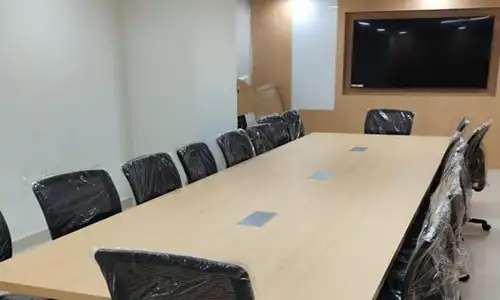
Integrated Office and Utility Sections: Administrative spaces, control rooms, or utility areas can be integrated into the overall structure plan.
Ventilation and Lighting Integration: Industrial airflow, daylight access, and heat management often influence building usability over time.
Loading and Vehicle Access Planning: Dock positioning and vehicle circulation are important in logistics-heavy environments.
Future Expansion Consideration: Certain projects are designed with scalability in mind to support later infrastructure growth.
Technical Considerations
A steel prefabricated building should not be selected only on the basis of covered area or quoted cost. Operational suitability depends on multiple technical factors.
Key considerations include:
- Soil and foundation conditions
- Wind exposure environment
- Roof load expectations
- Internal clearance requirements
- Crane integration needs
- Ventilation planning
- Drainage management
- Power and utility routing
- Future structural modifications
- Material movement patterns
Industrial buyers who ignore these factors during early planning often face expensive modifications later during operations.
How to Choose the Right Steel Prefabricated Building
A properly selected structure aligns with operational workflow rather than simply maximizing built-up area.
Start by evaluating:
Operational Purpose: Warehouse usage, fabrication activity, production movement, or utility deployment all require different planning logic.
Expansion Expectations: Businesses expecting phased growth should consider scalable structural layouts.
Site Accessibility: Transportation access affects material unloading, installation sequencing, and crane operations.
Environmental Conditions: Heat exposure, rainfall patterns, dust conditions, and industrial corrosion exposure influence structural planning decisions.
Utility Integration: Electrical systems, HVAC routing, water systems, and drainage coordination should be evaluated early.
A practical infrastructure discussion during the planning stage often reduces execution complications later.
Common Mistakes Buyers Make
Industrial buyers sometimes treat prefab steel buildings as standardized products. In reality, operational performance depends heavily on planning accuracy.
Frequent mistakes include:
- Underestimating future expansion requirements
- Ignoring internal movement planning
- Choosing inadequate roof height
- Delaying utility coordination
- Prioritizing lowest cost over structural suitability
- Incomplete drainage planning
- Not accounting for maintenance access
- Poor ventilation assessment
These issues may not appear during installation but often affect long-term operational efficiency.
When This Product May Not Be Suitable
Steel prefabricated buildings are highly practical for many industrial applications, but they are not ideal for every requirement.
This solution may require reassessment when:
- Highly complex architectural aesthetics are the primary priority
- Extremely constrained urban access limits structural installation
- Minimal operational lifespan is expected
- Frequent relocation is required
- Ultra-small single-room requirements make portable cabins more practical
In certain short-duration project environments, containerized or modular portable solutions may be operationally more efficient than full-scale prefab structures.
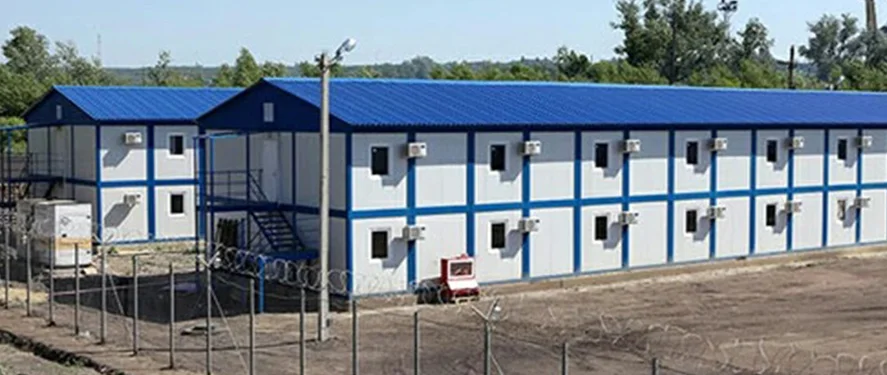
Installation and Delivery Process
A steel prefab project generally involves multiple coordinated stages rather than simple material dispatch.
The process typically includes:
- Requirement assessment
- Structural design planning
- Manufacturing and fabrication
- Material dispatch coordination
- Site preparation readiness
- Structural erection and alignment
- Roofing and cladding installation
- Utility coordination support
- Final operational readiness review
Project timelines vary depending on structure scale, customization level, site readiness, transportation conditions, and installation complexity.
For urgent infrastructure requirements, phased deployment planning is often used to reduce operational downtime.
Pricing and Cost Factors
The cost of a steel prefabricated building depends on more than structural size alone.
Pricing is generally influenced by:
- Structural design complexity
- Building span and height
- Roofing specifications
- Cladding material selection
- Foundation scope
- Utility integration requirements
- Installation conditions
- Transportation distance
- Site accessibility
- Expansion provisions
Buyers comparing quotations should evaluate long-term operational suitability alongside initial project cost.
Lower upfront pricing without proper structural planning may increase lifecycle expenditure later through modifications, maintenance interruptions, or operational inefficiencies.
Why Businesses Choose UNO Structures
Industrial infrastructure projects usually require coordination between manufacturing capability, execution understanding, and practical deployment planning.
About UNO Structures highlights the company’s infrastructure-focused approach across PEB systems, prefab structures, portable units, and industrial project execution.
Businesses work with UNO Structures because of:
- 15+ years of infrastructure experience
- 900+ completed projects
- Pan India supply capability
- Industrial customization support
- Multi-sector project exposure
- Practical execution-oriented planning
- Integration support for related infrastructure systems
- Experience with EPC and industrial project environments
The company operates from Greater Noida with project support extending across multiple industrial regions depending on operational feasibility and project scope.
Common Buyer Questions Before Purchase
1. Can steel prefabricated buildings support future expansion?
Yes. Many industrial buyers select prefab steel systems because additional bays or structural extensions can often be planned later based on operational growth and land availability.
2. Are these buildings suitable for permanent industrial use?
They are commonly used for long-term industrial and commercial operations including warehouses, workshops, manufacturing units, and utility infrastructure depending on structural planning and project requirements.
3. How important is site preparation before installation?
Very important. Delays in foundation readiness, drainage preparation, or utility routing often affect installation efficiency and commissioning schedules.
4. Can office areas be integrated inside the structure?
Yes. Administrative spaces, utility rooms, mezzanine sections, and operational support zones can be incorporated depending on project layout requirements.
5. Is transportation planning important for large structures?
Yes. Structural section sizes, road access, unloading conditions, and crane availability can affect dispatch and installation coordination.
6. Do prefab buildings reduce operational delays?
In many industrial projects, faster structural deployment helps businesses begin equipment installation, inventory movement, or operational setup earlier compared to extended conventional construction timelines.
Get Steel Prefabricated Building for Your Project
Industrial infrastructure delays can directly impact production schedules, warehouse commissioning, equipment movement, and operational readiness. Early structural planning often helps reduce execution bottlenecks during project expansion.
UNO Structures manufactures steel prefabricated building solutions from Greater Noida with supply capability across India for warehouse, industrial, commercial, and project infrastructure requirements.
For layout planning, customization discussions, structural consultation, or project-specific deployment support, connect with the team.