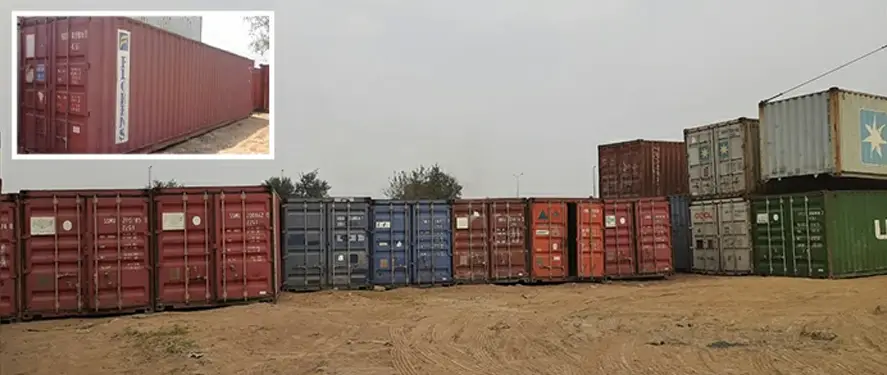
MS Cargo Container
Industrial projects often face one recurring challenge — protecting materials, equipment, and operational inventory while maintaining mobility across changing locations. An MS Cargo Container is designed for heavy-duty industrial storage and cargo handling where structural durability, transportation compatibility, and secure deployment become operational priorities.
Manufactured for industrial usage conditions, these containers support logistics operations, warehousing support, construction material storage, machinery movement, and site-based cargo management. UNO Structures manufactures customized steel cargo containers from its Greater Noida facility and supports deployment requirements across India for infrastructure companies, EPC contractors, industrial operators, and commercial projects.
Unlike lightweight storage solutions, cargo containers used in industrial environments must withstand repetitive loading cycles, outdoor exposure, transportation handling, and operational wear over extended durations. This is where fabrication quality, structural reinforcement, locking systems, flooring selection, and mobility considerations become critical during procurement decisions.
Businesses managing fast-moving project environments, temporary industrial storage, or transport-linked operations often prefer customized cargo container solutions because they simplify storage logistics without requiring permanent infrastructure investment.
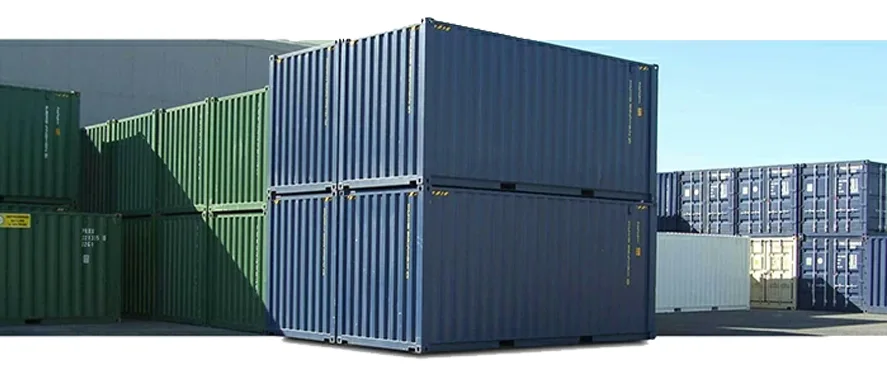
What is MS Cargo Container
An MS Cargo Container is a fabricated mild steel container unit used for industrial storage, transportation support, material handling, and equipment protection across logistics, warehousing, infrastructure, and project-site operations. These containers are designed for heavy-duty operational usage where durability, cargo safety, portability, and secure steel construction are important for long-term industrial deployment.
Unlike standard utility boxes or temporary sheds, MS cargo containers are engineered to handle operational stress associated with loading equipment, storing industrial inventory, and relocating materials between multiple project environments.
Depending on deployment requirements, these containers may include:
- Reinforced steel framework
- Cargo locking systems
- Ventilation arrangements
- Heavy-load flooring
- Forklift handling compatibility
- Internal partition options
- Customized dimensions
- Weather-protection treatments
For companies handling site movement, warehouse overflow, infrastructure execution, or industrial equipment management, these containers provide operational flexibility without creating permanent construction dependency.
Industrial Cargo Container Solutions for Storage and Logistics
Cargo handling environments differ significantly from standard storage conditions. Industrial buyers usually require containers that can tolerate repeated transportation cycles, shifting load conditions, and demanding outdoor environments.
Material Protection During Transit
Industrial materials frequently move between vendors, warehouses, project sites, and temporary operational zones. Poorly fabricated containers may deform under stress, develop locking failures, or suffer floor damage during repeated movement.
MS cargo containers fabricated for logistics usage help reduce exposure to:
- Moisture-related material damage
- Theft risks
- Transportation handling impact
- Outdoor environmental exposure
- Site-level storage instability
Heavy-Duty Site Storage
Many construction and infrastructure projects operate in locations where permanent storage infrastructure is unavailable during early Project stages.
In such scenarios, steel cargo containers are commonly used for:
- Mechanical equipment storage
- Electrical inventory holding
- Site consumable management
- Fabrication material security
- Spare parts containment
- Temporary warehouse extension
This operational flexibility becomes particularly important in remote industrial projects and phased construction deployments.
Customized Steel Cargo Containers for Operational Requirements
Every industrial project handles cargo differently. Some prioritize mobility, while others focus on static heavy-duty storage. A standard one-size container approach often creates operational inefficiencies.
UNO Structures supports customization based on:
Load Handling Requirements
Container design may vary depending on whether the unit stores:
- Fabricated steel components
- Machinery parts
- Industrial tools
- Electrical systems
- Construction consumables
- Warehouse inventory
- Operational equipment
Floor strength, internal support members, and access configuration are usually aligned accordingly.
Transportation Frequency
Containers moved regularly between sites require different structural considerations compared to fixed-position industrial storage units.
Frequent transportation applications may require:
- Reinforced lifting points
- Forklift compatibility
- Trailer-loading suitability
- Additional corner strengthening
- Mobility-focused design optimization
Environmental Exposure Conditions
Outdoor industrial deployment introduces factors such as:
- Rain exposure
- Dust-heavy conditions
- High-temperature environments
- Corrosive operational surroundings
Surface treatment selection and structural protection planning become important for long-duration usage.
Portable Cargo Containers for Construction and EPC Projects
Construction companies and EPC contractors often face material management problems during active project execution. Delayed material access, scattered inventory, and unsecured equipment storage can affect site productivity.
Portable MS cargo containers help streamline site logistics by creating centralized storage infrastructure that can shift alongside project phases.
Common Project-Site Uses
- Cement additive storage
- Electrical cable management
- Tool-room containers
- Fabrication consumable storage
- Project documentation storage
- Site machinery protection
- Temporary logistics support
In multi-phase infrastructure projects, these containers are frequently repositioned as work zones evolve.
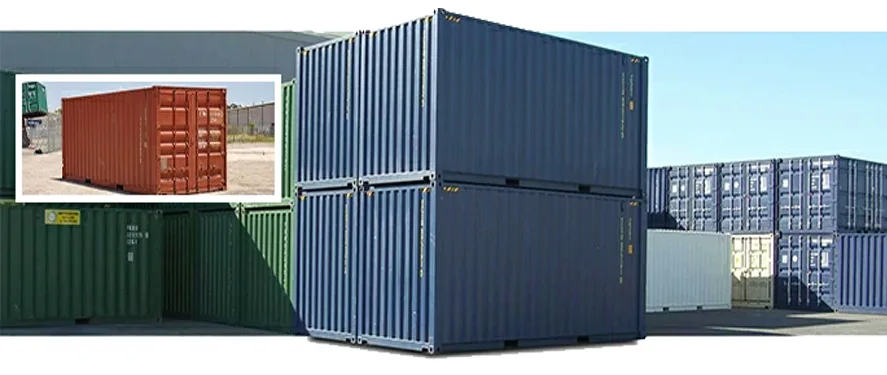
Applications in Real Use
Industrial cargo containers are used in operational environments where secure storage and transportation flexibility are equally important.
Infrastructure and Construction Projects: Large project sites often require mobile storage support before permanent warehousing infrastructure becomes operational.
Industrial Warehousing: Warehouses use steel cargo containers for overflow inventory management, seasonal storage expansion, and equipment segregation.
Logistics Operations: Cargo containers assist in movement planning, temporary holding applications, and inter-location industrial material transfer.
Manufacturing Facilities: Factories use cargo containers for raw material segregation, spare component management, and outdoor industrial storage.
Oil, Energy, and Utility Projects: Remote utility projects commonly require secure portable storage systems capable of operating in temporary deployment environments.
Industries Using This Product
MS cargo containers are widely used across:
- EPC contracting companies
- Infrastructure developers
- Warehousing operators
- Logistics companies
- Manufacturing plants
- Renewable energy projects
- Airport infrastructure projects
- Industrial maintenance contractors
- Fabrication and engineering firms
- Oil and gas support operations
Organizations handling high-volume material movement generally prioritize durable steel container systems because operational interruptions caused by poor storage infrastructure can create direct project delays.
Design and Customization Options
Cargo container selection is rarely limited to dimensions alone. Industrial buyers usually evaluate usability, accessibility, mobility, and operational workflow compatibility.
Structural Configuration Options
Containers may be customized with:
- Single-door or double-door access
- Side-opening arrangements
- Internal partitions
- Multi-compartment layouts
- Ventilation systems
- Reinforced flooring
- Locking configurations
Handling Compatibility
Depending on operational workflow, cargo containers may include:
- Crane lifting provisions
- Forklift movement compatibility
- Trailer transport suitability
- Stackable design planning
Interior Functional Adaptations
Certain industrial applications require:
- Shelving arrangements
- Equipment mounts
- Lighting provisions
- Electrical integration
- Ventilation enhancements
Customization planning depends heavily on the operational environment rather than only physical dimensions.
Technical Considerations
Industrial buyers evaluating cargo containers should review practical deployment conditions before finalizing specifications.
Structural Durability: Container durability depends on fabrication quality, frame reinforcement, welding consistency, flooring suitability, and steel thickness selection.
Accessibility and Workflow: Poorly planned access design can slow loading and unloading operations, particularly in material-intensive projects.
Transportation Constraints: Road transportation limitations, crane accessibility, and unloading conditions should be reviewed before selecting container dimensions.
Security Requirements: Industrial sites handling expensive tools, machinery, or sensitive inventory usually prioritize advanced locking arrangements and reinforced entry points.
How to Choose the Right MS Cargo Container
Selecting the correct container depends less on “standard size” and more on operational workflow.
Choose Based on Usage Frequency: Frequent transportation requires mobility-oriented reinforcement. Static storage may prioritize internal capacity and loading accessibility instead.
Evaluate Loading Pattern: Some buyers underestimate loading style differences. Manual loading, forklift loading, and palletized handling each affect design suitability.
Assess Deployment Environment: Outdoor industrial deployment demands different protective planning compared to covered warehouse usage.
Consider Future Scalability: Projects expanding across multiple locations often benefit from standardized container planning for easier logistics coordination.
Common Mistakes Buyers Make
Prioritizing Only Initial Cost: Low-cost fabrication may reduce operational life and increase repair frequency during industrial usage.
Ignoring Transportation Planning: Containers sometimes become difficult to move because transport clearance and unloading access were not evaluated early.
Underestimating Flooring Requirements: Industrial cargo weight can damage unsuitable flooring systems over time.
Choosing Generic Designs: Standardized containers may create workflow inefficiencies if access points and loading patterns are not aligned with operational usage.
When This Product May Not Be Suitable
MS cargo containers may not be the ideal choice for every deployment scenario.
They may not suit:
- Highly temperature-sensitive storage without specialized modification
- Lightweight short-duration domestic storage requirements
- Premium interior commercial spaces requiring aesthetic finishes
- Ultra-mobile applications requiring lightweight composite structures
For highly specialized environmental control requirements, alternative container systems or insulated solutions may be more appropriate.
Installation and Delivery Process
Cargo container deployment typically involves multiple operational stages rather than simple product dispatch.
Requirement Assessment
Project teams generally finalize:
- Container dimensions
- Usage type
- Loading method
- Mobility requirements
- Site conditions
- Customization scope
Manufacturing and Fabrication
UNO Structures manufactures customized container solutions from its Greater Noida manufacturing operations based on operational deployment requirements.
Transportation Coordination
Container movement planning may involve:
- Route evaluation
- Vehicle selection
- Site unloading assessment
- Crane coordination if required
Site Positioning
Containers are positioned based on accessibility, workflow movement, and operational safety considerations.
Pricing and Cost Factors
MS cargo container pricing varies depending on multiple operational and fabrication variables.
Major influencing factors include:
- Container dimensions
- Steel specification
- Flooring selection
- Structural reinforcement
- Custom fabrication scope
- Transportation requirements
- Internal fit-outs
- Surface treatment requirements
- Mobility features
Buyers managing long-term industrial usage usually evaluate lifecycle practicality alongside upfront procurement cost.
Why Businesses Choose UNO Structures
Industrial buyers typically prefer vendors capable of handling both fabrication and operational coordination rather than only supplying standardized units.
UNO Structures supports containerized infrastructure, prefabricated systems, PEB structures, and industrial project solutions for varied operational environments across India.
With over 15 years of industry experience, 900+ completed projects, and support provided to infrastructure, industrial, logistics, and commercial sectors, the company focuses on execution-oriented deployment planning rather than purely catalogue-based supply models.
The company’s manufacturing operations in Greater Noida support customization flexibility for:
- Cargo containers
- Portable infrastructure
- Office containers
- Storage systems
- Industrial container applications
Operational exposure across organizations such as DLF, MAX Healthcare, Delhivery, Larsen & Toubro, Tata Power Solar, Air India, Samsung Electronics, Reliance Industries Limited, and Noida International Airport strengthens execution familiarity across diverse project environments.
Businesses evaluating company capabilities can review organizational background through UNO Structures About us Page.
Common Buyer Questions Before Purchase
1. Can the cargo container be customized for specific industrial equipment?
Yes. Container dimensions, door positioning, flooring strength, internal layouts, ventilation, and access systems can be customized depending on equipment handling and operational workflow requirements.
2. Are these containers suitable for outdoor industrial deployment?
They are commonly used in outdoor project environments, warehousing zones, infrastructure sites, and logistics operations where weather exposure and operational durability are important considerations.
3. Can containers be relocated between multiple project sites?
Yes. Many buyers use these containers for multi-location deployment. Transportation handling compatibility and structural reinforcement planning are important for repeated movement applications.
4. Is forklift handling possible?
Depending on container configuration and usage requirements, forklift-compatible designs can be planned during fabrication.
5. Are these containers only used for transportation?
No. Many industrial operators use them as static heavy-duty storage units, temporary warehousing support systems, and operational inventory management infrastructure.
6. Can internal partitions or shelving be added?
Yes. Internal segmentation, shelving systems, lighting arrangements, and utility provisions may be included based on deployment needs.
Get MS Cargo Container for Your Project
Industrial storage and cargo handling requirements rarely remain static. Whether the requirement involves project-site deployment, logistics support, material protection, temporary warehousing, or customized steel cargo storage, practical execution planning becomes critical before procurement.
UNO Structures manufactures and supplies customized MS cargo containers from Greater Noida with pan India project support capability for industrial, infrastructure, EPC, warehousing, and logistics applications.
For ongoing projects, urgent deployment needs, or operational storage planning discussions, businesses can connect directly with the team through UNO Structures Contact Page.