Modular MS Container Home
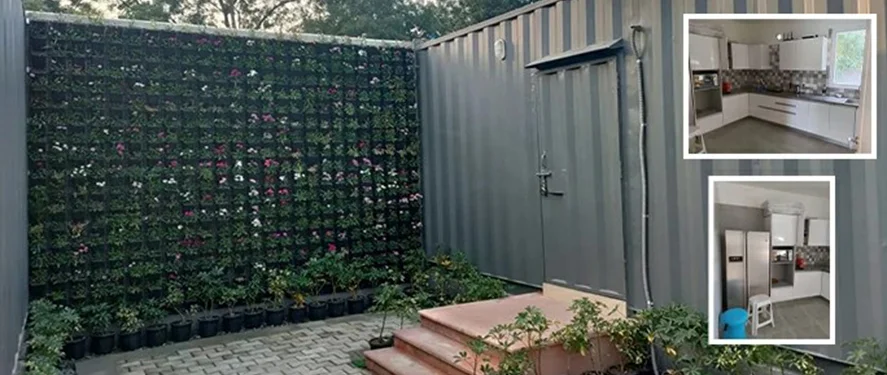
A Modular MS container home is a steel-based prefabricated living structure designed for faster deployment than conventional construction while maintaining flexibility for residential, project-site, or remote accommodation usage. These units are widely used where operational timelines, mobility, space optimization, and practical installation planning matter more than lengthy civil construction cycles.
Manufactured by UNO Structures in Greater Noida with pan-India supply capability, these modular housing systems support container-based living requirements across construction projects, industrial operations, workforce accommodation setups, farmhouse developments, and compact residential infrastructure needs. The structures can be customized for layout planning, insulation requirements, utility integration, internal finishes, access systems, and occupancy capacity depending on operational usage.
Businesses and developers often evaluate modular steel container housing when conventional construction becomes difficult due to remote locations, urgent deployment schedules, temporary project phases, or limited site accessibility. Unlike standard shipping-container reuse concepts, modern MS modular homes are typically engineered around usability, ventilation planning, mobility considerations, and long-term operational practicality.
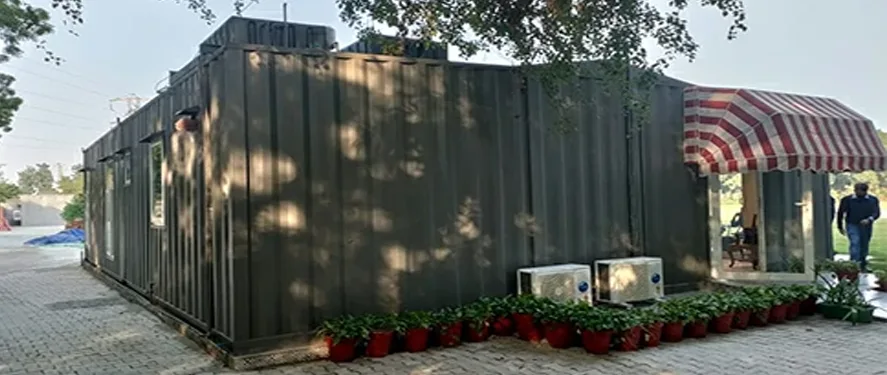
What is Modular MS Container Home
A modular MS container home is a fabricated mild-steel living structure developed using modular construction principles for faster installation and flexible space planning. These units may function as permanent, semi-permanent, or relocatable housing infrastructure depending on project requirements, foundation conditions, and intended duration of use.
Unlike traditional masonry construction, modular container homes are assembled through prefabricated structural components, reducing on-site construction dependency. This approach becomes particularly useful in remote projects, infrastructure development zones, workforce housing requirements, and controlled-budget residential developments where project timelines are closely monitored.
The structure can include:
- Bedroom modules
- Living spaces
- Pantry or kitchen sections
- Washrooms
- Electrical routing systems
- Insulation layers
- HVAC integration provisions
- Utility connection points
- External cladding options
- Staircase and terrace integration
Businesses evaluating portable housing solutions often compare these systems with conventional prefab structures because modular MS units support phased expansion and transportation flexibility with relatively lower on-site disruption.
Prefab Container Housing for Faster Project Deployment
In many industrial and infrastructure projects, accommodation delays directly affect workforce management and operational continuity. Prefabricated modular housing helps reduce dependency on sequential civil construction activities.
Why Faster Deployment Matters
When project teams wait for conventional housing development, the following issues commonly appear:
- Delayed workforce mobilization
- Higher temporary rental dependency
- Remote-site accommodation shortages
- Utility setup coordination delays
- Increased project administration challenges
Modular MS container homes are frequently considered in these situations because structural fabrication and interior preparation can progress simultaneously before site positioning.
Utility Integration Readiness
Practical deployment is not only about structure placement. Real-world residential usability depends on:
- Electrical distribution planning
- Water line accessibility
- Drainage routing
- Ventilation pathways
- Thermal insulation suitability
- Access clearance for transportation
- Foundation stability
Experienced modular manufacturers generally plan these integration points during fabrication rather than treating them as post-installation modifications.
Portable Steel Living Structures for Remote and Flexible Use
Portable container-based housing has moved beyond temporary labour accommodation. Many buyers now use modular MS homes for:
- Farmhouse retreats
- Site engineer accommodation
- Tourism infrastructure
- Security staff living spaces
- Institutional accommodation
- Mining and remote industrial housing
- Temporary township development
Mobility Advantage in Multi-Phase Projects
One major operational advantage is relocation feasibility. In industries where project zones change over time, movable modular housing helps reduce repeated infrastructure investment.
This becomes relevant in:
- EPC execution projects
- Renewable energy developments
- Pipeline projects
- Highway construction
- Mining support operations
Rather than rebuilding housing repeatedly, organizations may reposition container-based accommodation infrastructure according to operational phases.
Space Optimization in Compact Land Conditions
Urban-edge industrial developments and compact land parcels often require efficient layout planning. Modular homes can be configured vertically, linearly, or cluster-based depending on access movement, occupancy density, and site workflow.
Container-Based Residential Solutions with Custom Layout Planning
A modular MS container home is rarely a one-size-fits-all structure. Different users prioritize different operational outcomes.
Common Layout Configurations
Single Occupancy Units
Suitable for:
- Site managers
- Security supervisors
- Farmhouse usage
- Compact residential applications
Multi-Unit Accommodation Blocks
Used in:
- Workforce housing
- Contractor accommodation
- Institutional living setups
- Remote industrial camps
Expandable Modular Combinations
Preferred when:
- Future expansion is expected
- Site occupancy may increase
- Operational usage can change later
Interior Planning Considerations
Practical residential usability depends heavily on internal planning rather than only external structure dimensions.
Buyers often evaluate:
- Natural lighting
- Heat management
- Washroom ventilation
- Storage integration
- Noise control
- Maintenance accessibility
- Flooring suitability
- Long-term cleaning practicality
Poor planning in these areas can create operational discomfort even if the structure itself is durable.
Applications in Real Use
Modular MS container homes are used across multiple operational environments where conventional housing infrastructure is difficult, slow, or commercially impractical.
Common Deployment Scenarios
- Remote infrastructure projects
- Temporary workforce colonies
- Farmhouse living spaces
- Mining project accommodation
- Industrial expansion phases
- Tourism and eco-stay concepts
- Security and facility management housing
- Educational campus accommodation
- Disaster-relief temporary housing
- Site engineer residential cabins
Many buyers now prefer modular living systems during fast-moving project phases where permanent civil construction is either commercially inefficient or operationally delayed.
Industries Using This Product
The demand for modular steel housing extends across several industries where accommodation infrastructure directly impacts workforce continuity and project execution.
Industries Commonly Using Modular Housing
- Construction and EPC
- Warehousing and logistics
- Renewable energy projects
- Oil and gas support operations
- Industrial manufacturing
- Healthcare expansion projects
- Institutional infrastructure
- Airport and transport infrastructure
- Mining and remote industrial sectors
With experience across infrastructure-oriented projects and containerized structures, UNO Structures supports customized modular infrastructure planning based on operational deployment requirements rather than standard fixed layouts.
Design and Customization Options
Modular housing projects usually vary according to occupancy duration, environmental exposure, transportation access, and intended comfort levels.
Common Customization Areas
Structural Configuration
- Single-module units
- Multi-container combinations
- Double-floor configurations
- Corridor-connected layouts
Interior Fit-Out
- Wall panel selections
- False ceiling integration
- Flooring materials
- Washroom planning
- Furniture integration
Environmental Adaptation
- Insulation requirements
- Ventilation systems
- Heat exposure planning
- Weather protection considerations
Utility Planning
- Electrical routing
- Plumbing integration
- Internet and surveillance routing
- HVAC provisions
The ability to customize becomes particularly important in Indian deployment conditions where climate, site access, and occupancy density vary significantly between projects.
Technical Considerations
Before finalizing a modular MS container home, buyers should assess operational and structural considerations beyond aesthetics.
Transportation Accessibility
Oversized modular units may require route planning depending on:
- Highway clearance
- Site entry width
- Crane accessibility
- Terrain conditions
Foundation Planning
Different installation conditions may require:
- PCC foundations
- Pedestal supports
- Structural base frames
- Elevated placement systems
Environmental Exposure
Sites exposed to:
- Coastal moisture
- Heavy rainfall
- High daytime heat
- Dust-intensive industrial conditions
may require additional planning for coatings, insulation, and ventilation systems.
Occupancy Duration
Short-term deployment and long-term residential use may involve different material and interior planning approaches.
How to Choose the Right Modular MS Container Home
A suitable modular housing system depends more on operational suitability than simply choosing dimensions.
A practical buying approach includes evaluating occupancy load, transportation feasibility, site conditions, insulation needs, utility availability, relocation possibility, and expected usage duration. Buyers should also assess future expansion potential because many projects evolve after initial deployment.
Questions Buyers Should Evaluate
- Will the structure remain fixed or movable?
- Is thermal insulation required year-round?
- What is the planned occupancy count?
- Will future expansion be required?
- Is the location remote or urban-accessible?
- Are utilities already available on-site?
- Does the project require phased deployment?
Importance of Site Workflow Understanding
Experienced buyers often involve operations teams before finalizing layouts because movement flow, utility placement, and maintenance access significantly affect long-term usability.
Common Mistakes Buyers Make
Choosing Based Only on Initial Cost
Lower-cost structures sometimes compromise:
- Structural quality
- Insulation suitability
- Interior usability
- Maintenance practicality
Ignoring Transportation Constraints: Large units occasionally face unexpected deployment delays because transportation access was not evaluated early.
Underestimating Heat and Ventilation Requirements: In many Indian conditions, poor thermal planning can reduce residential comfort substantially.
Not Planning for Future Expansion: Projects that later require occupancy increase may face layout limitations if scalability was ignored initially.
When This Product May Not Be Suitable
Modular MS container homes are practical for many applications, but they are not ideal for every project.
Situations Where Alternatives May Be Better
- Ultra-high-rise residential developments
- Highly permanent luxury villa construction
- Projects with severe architectural restrictions
- Locations with extremely limited transportation access
- Sites requiring extensive underground integration
For purely aesthetic premium residential developments without deployment urgency or mobility requirements, conventional construction may sometimes offer greater architectural flexibility.
Installation and Delivery Process
The installation process depends on structure size, customization level, site accessibility, and utility readiness.
Typical Project Workflow
Requirement Discussion: Project scope, occupancy planning, and operational usage are evaluated.
Design and Configuration: Layout planning, utility integration, and customization requirements are finalized.
Manufacturing and Fabrication: Structural fabrication and interior preparation are coordinated at the manufacturing facility.
Transportation and Positioning: Modules are delivered and placed according to site deployment planning.
Utility Coordination: Electrical, plumbing, and operational integrations are completed depending on project scope.
For customized container housing projects, deployment planning often becomes as important as manufacturing itself.
Pricing and Cost Factors
The cost of a modular MS container home depends on multiple variables rather than a single standard rate.
Major Cost Influencing Factors
- Structure size
- Number of modules
- Insulation specifications
- Interior fit-out level
- Utility integration complexity
- Transportation distance
- Crane and installation requirements
- Custom layout engineering
- Site accessibility conditions
Projects requiring higher residential comfort levels, premium finishes, or difficult logistics generally involve different cost structures compared to basic workforce accommodation setups.
Why Businesses Choose UNO Structures
With more than 15 years of experience in prefabricated infrastructure and containerized solutions, UNO Structures supports industrial and commercial buyers requiring execution-oriented modular infrastructure rather than generic off-the-shelf units.
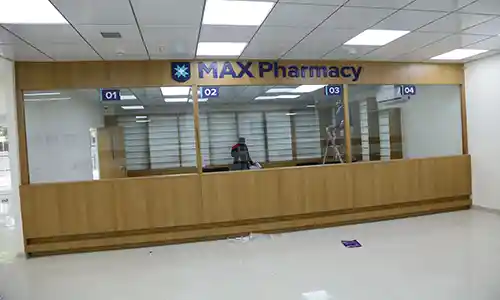
The company has worked across infrastructure, healthcare, industrial, warehousing, and EPC-linked projects with clients including DLF, MAX Healthcare, Delhivery, Tata Power Solar, Larsen & Toubro, Reliance Industries Limited, Toshiba, Air India Express, and NCC Limited.
Operationally, buyers often prioritize:
- Customization flexibility
- Project coordination support
- Manufacturing capability
- Pan-India supply handling
- Practical deployment understanding
- Multi-industry execution familiarity
For buyers comparing different modular living infrastructure options, the company also supports related container-based solutions through its Modular MS Container Home Solutions section.
Common Buyer Questions Before Purchase
1. Can these structures be used for long-term residential occupancy?
Yes, many modular MS container homes are designed for extended usage. However, insulation planning, ventilation systems, waterproofing, and internal comfort specifications should be evaluated according to regional climate and occupancy duration.
2. Is relocation possible after installation?
In many cases, modular housing units can be relocated depending on structural configuration, transportation planning, and installation methodology. Buyers planning phased projects often discuss mobility requirements before fabrication.
3. Are utility connections included during manufacturing?
Electrical routing, plumbing provisions, and HVAC integration planning can usually be incorporated during fabrication depending on project scope and customization requirements.
4. How quickly can deployment happen for urgent projects?
Deployment timelines vary according to design complexity, customization level, transportation logistics, and site readiness. Projects with standardized layouts may move faster than heavily customized residential configurations.
5. Can multi-floor modular housing be developed?
Depending on structural engineering requirements and project specifications, modular configurations may support stacked or interconnected layouts for larger occupancy requirements.
6. What factors affect pricing the most?
Structure dimensions, insulation type, interior finish quality, utility integration, transportation distance, and site accessibility are among the biggest pricing influencers.
7. How does a modular MS container home compare with conventional construction?
Container-based modular housing generally offers faster deployment, controlled fabrication conditions, and mobility advantages. Conventional construction may provide broader architectural flexibility for highly permanent developments.
8. What should buyers finalize before requesting a quotation?
Occupancy count, site location, intended usage duration, insulation expectations, utility availability, transportation accessibility, and future expansion possibilities should ideally be discussed early.
Get Modular MS Container Home for Your Project
Whether you are planning remote-site accommodation, prefab residential infrastructure, expandable workforce housing, or container-based living setups, project suitability depends on proper planning from the beginning.
Contact UNO Structures to discuss layout planning, operational requirements, customization scope, deployment considerations, and installation coordination for your modular housing requirement.
Manufactured from Greater Noida with pan-India supply capability, UNO Structures supports practical modular infrastructure planning for industrial, infrastructure, institutional, and commercial project environments where deployment speed and usability matter.